ASHS Classic
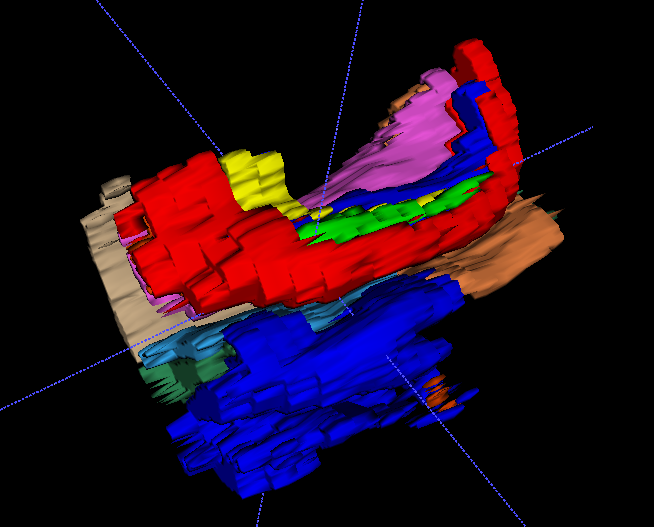
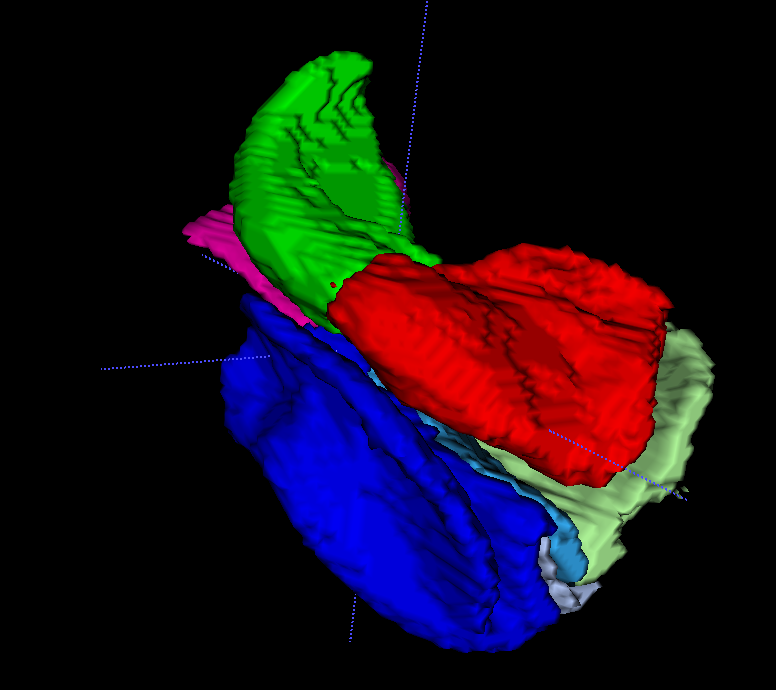
ASHS (Automatic Segmentation of Hippocampal Subfields) is software for automatic segmentation of the medial temporal lobe (MTL) substructures from brain MRI scans. These structures are involved in early Alzheimer's disease and in a number of other neurological conditions. They are also important in research on memory and cognition.
- Automatically labels hippocampal subfields in T2-weighted MRI, or anterior/posterior hippocampus in T1-weighted MRI.
- Automatically labels subregions of the MTL cortex, including entorhinal cortex, perirhinal cortex and parahippocampal cortex, in both T1-weighted and T2-weighted MRI scans.
- Leverages advanced label fusion approaches for multi-atlas segmentation.
- Can be easily retrained to use your own segmentation protocol.
- Free, open-source software.
- Runs on any computer through Cloud ASHS, or locally on Linux and MacOS.
Getting started
-
Pick an atlas, check your MRI data and choose how to run ASHS.
-
Send your scans to our server from ITK-SNAP. No installation needed.
-
Install ASHS on a Linux or MacOS workstation or cluster.
-
Train ASHS on your own manual segmentation protocol.
About us
ASHS is developed by members of the Penn Image Computing and Science Laboratory (PICSL) in the Department of Radiology at the University of Pennsylvania. Please see Citations for authorship information.
See the equivalent page for HyperASHS.